Keep God First SVG PNG, Jesus SVG
A Designer’s First Look: Clean, Reverent, and Ready for Stitching
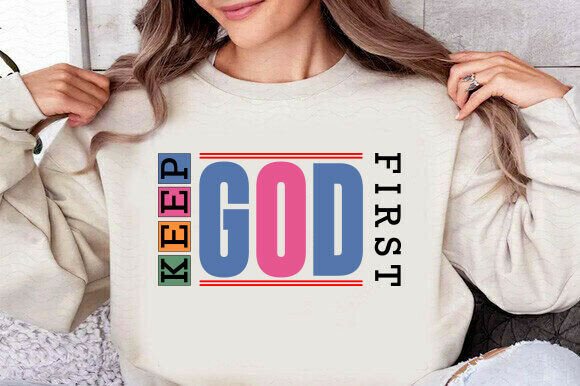
When I opened Keep God First SVG PNG, Jesus SVG, my eye went straight to the balance—soft curves in the lettering, gentle spacing, and a subtle cross motif integrated just above the “G” in “God.” It’s not ornate or flashy, but it carries quiet intention. As an embroidery designer who’s stitched hundreds of faith-based pieces—from nursery onesies to boutique aprons—I immediately sensed this wasn’t made for mass-printed tees alone. It’s built for meaning, not just markup. The 300 DPI PNG delivers crisp edges and smooth gradients, which matters when converting to a machine embroidery design later. That clarity translates directly to cleaner satin stitch outlines and more predictable fill stitch behavior on fabric.
Real-World Test: Embroidering a Linen Tote Bag for a Local Church Boutique
Last week, I used Keep God First SVG PNG, Jesus SVG as the centerpiece for a limited-run linen tote bag—intended for a church women’s ministry launch. Linen is unforgiving: slightly uneven weave, low stretch, and prone to puckering if stabilizer or stitch density isn’t dialed in. I converted the PNG into an embroidery file using vector tracing (not auto-trace—too many soft edges), then manually adjusted stitch direction for vertical flow across the bag’s front panel. The result? A clean, centered 4.2” wide motif that read clearly from six feet away—not too small to miss, not so large it overwhelmed the natural texture of the fabric. Customers responded warmly: “It feels handmade, not printed,” one said. That’s the power of thoughtful execution with a strong base like this.
Where It Shines—and Where to Pause
Keep God First SVG PNG, Jesus SVG works beautifully on medium-weight fabrics where stitch definition matters most: cotton twill aprons, fleece-lined sweatshirts, structured canvas patches, and even tea towels with tight weaves. Its moderate height-to-width ratio avoids distortion on curved surfaces like caps—though I’d still recommend testing on a scrap cap blank first, especially with dense fill areas near the cross detail. On baby onesies? Yes—but only with lightweight tear-away stabilizer and reduced stitch density. Tiny letterforms like the “i” in “First” need breathing room; over-stitching there risks thread buildup or skipped stitches on thin knit fabric.
On dark fabrics, contrast becomes critical. I tested black thread on cream linen and white thread on navy cotton—and both worked, but the white-on-navy required a light topping stabilizer to prevent shadowing. For stretchy fabrics like jersey tees, skip direct embroidery unless you’re using cutaway + topping combo and reducing density by 15–20%. This isn’t an appliqué design, so don’t expect built-in underlay or jump-stitch optimization—it’s a graphic first, an embroidery file second.
Design Integrity Meets Commercial Practicality
As an Etsy seller and small shop product developer, I pay close attention to how a design affects perceived value. Keep God First SVG PNG, Jesus SVG lands right in that sweet spot: reverent without being stiff, simple without feeling generic. It reads well on digital mockups—especially when layered over natural textures like unbleached cotton or oatmeal linen. That versatility helps craft businesses maintain brand consistency across social media, packaging, and physical products. Buyers notice when stitching looks intentional, not rushed—and this design supports that impression when executed with care.
For personalized gifts—think baptism blankets, wedding handkerchiefs, or holiday stockings—the phrase resonates emotionally without demanding visual complexity. That’s strategic: less detail means fewer thread breaks, faster hooping, and higher reliability across machines. And because it’s delivered as a single high-res PNG, it’s easy to repurpose: print-and-iron transfers, sublimation previews, or even laser-cut wood signs—all while keeping your core embroidery workflow intact.
What Every Embroiderer Should Do Before Stitching
- Test on scrap fabric first—especially if using textured, dark, or stretchy materials.
- Check thread color contrast in natural light, not just screen preview.
- Review stitch density before finalizing your embroidery file—this PNG doesn’t include stitch data, so density decisions are yours to make.
- Confirm hoop size compatibility: estimate final dimensions early to avoid re-hooping mid-project.
- Inspect small details like serifs and inner corners—some may need slight simplification for reliable satin stitching.
- Try black-and-white mockups to assess legibility at smaller sizes (e.g., 3” wide for baby items).
- Compare light/dark backgrounds to choose optimal thread and stabilizer pairing.
- Use proper stabilizer—lightweight cutaway for knits, tear-away for stable wovens, topping for napped fabrics.
- Verify licensing terms before selling finished embroidered items or reselling digital files—this listing confirms only a PNG delivery, not commercial redistribution rights.
Final Thought: A Quiet Anchor in a Busy Niche
In a market flooded with loud, trend-driven graphics, Keep God First SVG PNG, Jesus SVG stands out by doing less—and doing it well. It’s not trying to be everything. It’s a focused, respectful motif that serves real projects: custom apparel for faith communities, handmade nursery decor, thoughtful holiday gifts, and small-batch boutique merchandise. As a designer, I appreciate that its simplicity invites craftsmanship—not shortcuts. Whether you're stitching your first embroidered pillow cover or scaling up for a church fundraiser line, this design gives you room to execute with confidence, clarity, and care. Just remember: great embroidery starts with smart prep—and this PNG gives you a strong, clean foundation to build on.