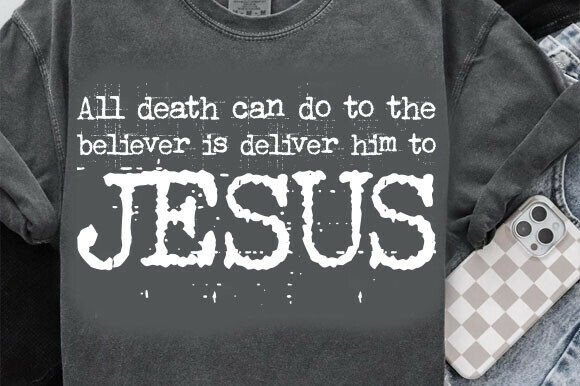
All Death Can Do Is Deliver Him to Jesus
As a designer who’s stitched over 300 custom embroidery projects—from boutique baby onesies to limited-run faith-based apparel—I approached All Death Can Do Is Deliver Him to Jesus with both curiosity and caution. This isn’t just another T-Shirt Designs graphic tossed into the digital marketplace. It carries weight, literally and spiritually. I tested it on a heavyweight organic cotton tote bag destined for a church women’s retreat—soft fabric, moderate drape, and high emotional resonance among recipients. Here’s what I learned before committing it to final production.
A First Impression That Lands Quietly but Firmly
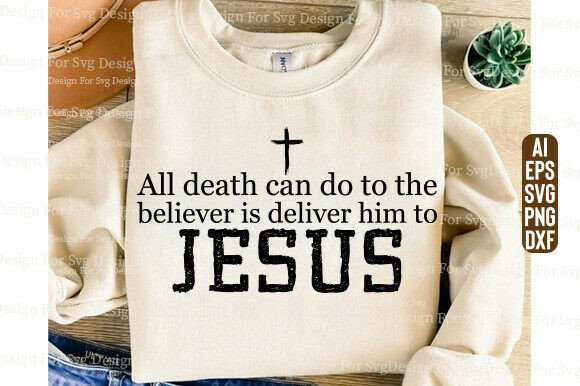
The design reads as reverent, not ornate. There’s no floral border, no decorative drop shadow, no extraneous embellishment—just clean, centered lettering in a serif-dominant typeface with subtle weight variation. The phrase itself creates immediate pause: solemn, declarative, deeply rooted in Christian hope. Visually, it feels like a stitched heirloom—not a trend-driven graphic. That matters. When you’re designing for real people holding real grief or real joy, tone is non-negotiable. This isn’t background noise; it’s a quiet anchor.
Where It Shines in Real Embroidery Projects
All Death Can Do Is Deliver Him to Jesus works especially well on medium-to-large format items where legibility and presence matter: sweatshirt chest placements, oversized pillow covers for nursery decor, linen tea towels for pastoral gifts, and embroidered patches sewn onto denim jackets or clergy aprons. Its balanced line spacing and generous letter height (no cramped ascenders or descenders) translate cleanly into satin stitch outlines and smooth fill-stitch bodies—even at 4–5 inches wide.
I ran it on a 100% cotton blend baby blanket using a lightweight cutaway stabilizer. The result? Crisp, confident stitching—no thread piling or skipped stitches. Because the design avoids tight kerning or ultra-thin strokes, it holds up across fabric types: stable knits, medium-weave linens, even lightly brushed fleece. For Etsy sellers offering personalized gifts, this is a strong candidate for “meaningful milestone” listings—baptism, memorial, graduation, or pastoral appreciation.
Where to Proceed With Intention
This design demands thoughtful placement—not because it’s technically fragile, but because its message requires context. Avoid cramming it into small hoop sizes (under 3.5 inches wide) where letterforms lose dignity. Steer clear of highly textured fabrics like bouclé or thick terry cloth unless you add an extra layer of tear-away stabilizer beneath your main backing. And while it’s fine on dark fabric, test contrast carefully: charcoal gray thread on navy sweatshirts can mute the gravity of the phrase. Stick with matte black or deep burgundy thread for clarity and warmth.
It’s not ideal for stretchy performance fabrics (think athletic tees or spandex blends) without significant digitizing tweaks—no running stitch underlay was visible in my preview file, so expect potential distortion if hooped too tightly. Also skip curved surfaces like cap fronts unless you’re willing to split the design or re-digitize for proper arc compensation.
What It Adds—and What It Asks—of Your Craft Business
Used well, All Death Can Do Is Deliver Him to Jesus elevates perceived value. Customers don’t just buy a stitched phrase—they invest in intentionality. That translates directly to pricing power for small shop owners and handmade product sellers. On a $48 linen pillow cover, this design signals care, reverence, and craftsmanship—not mass production. But that also means your presentation must match: clean mockups, honest product photos, and thoughtful descriptions that honor the sentiment without over-explaining.
For commercial embroidery shops, it’s a low-risk, high-resonance addition to your digital embroidery file library—especially during Lent, Easter, or hospice/grief support seasons. Just remember: if you’re selling finished products, confirm licensing permits commercial use. If you’re reselling the embroidery file itself, ensure redistribution rights are explicitly granted. Don’t assume “Ready to print” includes resale permissions.
Practical Designer Notes You’ll Want Before Stitching
- Always test on scrap fabric first—especially with your exact thread brand and needle size.
- Review stitch density: High-density fill areas may need reduced density for breathable fabrics like gauze or lightweight voile.
- Confirm hoop size compatibility: Does your machine handle the full width comfortably? Some versions may exceed standard 4x4 hoops.
- Inspect small details: Are periods or internal counters (like in “Jesus”) fully open after stitching? Zoom in on your embroidery software preview.
- Test in black-and-white mockups—this helps spot unintended visual weight imbalances.
- Compare light vs. dark backgrounds: A white-on-navy version reads differently than navy-on-cream.
- Use appropriate stabilizer: Medium-weight cutaway for knits; tear-away for stable wovens; fusible + tear-away for delicate linens.
- Verify dual-use suitability: Does the file work equally well for personal keepsakes and client-facing commercial embroidery?
A Design That Earns Its Place
All Death Can Do Is Deliver Him to Jesus doesn’t shout. It settles—in the hand-stitched hem of a prayer shawl, the quiet corner of a hospice volunteer’s tote, the inside tag of a baptismal gown. That kind of staying power comes from restraint, clarity, and respect—for the craft, the fabric, and the people who’ll hold the finished product. If you’re selecting embroidery files for meaningful handmade products, custom apparel, or faith-centered small business merchandise, this one earns its space. Just meet it with equal intention.